Homemade Fly Trap: 5 DIY Builds for Fruit & House Flies
The best homemade fly trap depends on the fly: an ACV bowl for fruit flies, a soda-bottle funnel for house flies — plus the two flies no trap can fix.
10 min read · Updated 2026-09-21
By PlantFix Editorial Team · Sources: University Extension Programs, USDA, EPA
The Best Homemade Fly Trap for Each Fly (Quick Answer)
There is no all-purpose fly trap, homemade or bought — every design works by exploiting one species' specific appetite. For fruit flies (small, tan, red-eyed, hovering over the fruit bowl or recycling), the apple cider vinegar bowl with a drop of dish soap is the proven winner, with the paper-cone jar trap as the tidier long-game version. For house flies (big, loud, landing on everything), a cut-down soda bottle baited with sugar water does real work near entry points and trash. And two common flies are lost causes for any trap: fungus gnats breed in houseplant soil and are only ended by treating the soil, and drain flies breed in the gunk film inside your pipes, which no counter-top trap touches.
So the honest first step is a ten-second ID: where do they hover, and what do they look like? Our gnats vs. fruit flies guide settles the most common confusion. Below are the five builds worth making, each with its exact recipe, what it catches, and the mistakes that turn a working design into a bowl of vinegar that catches nothing.
Which Trap for Which Fly
| The fly | Best homemade trap | Bait |
|---|---|---|
| Fruit flies (tan, red eyes, at the fruit bowl) | ACV bowl with plastic wrap, or paper-cone jar | Apple cider vinegar + drop of dish soap |
| House flies (large, noisy, land everywhere) | Soda-bottle funnel trap | Sugar water, overripe fruit |
| Fruit flies at a wine rack or bar cart | Wine-dregs bottle | The last inch of red wine + soap |
| Fungus gnats (small, dark, hop around plant soil) | None — treat the soil | See the gnat elimination plan |
| Drain flies (fuzzy, moth-like, on bathroom walls) | None — clean the drain | Enzyme drain cleaner, brush |
One pattern worth noticing: every trap that works is a one-way door with a smell inside. The engineering differences are just about which smell and how the door is built.
Build #1: The ACV Bowl — the Fruit Fly Standard
The classic for a reason, and the fastest to make. A small bowl or jar, an inch of apple cider vinegar, two drops of dish soap, plastic wrap pulled tight over the top, and 4–5 small holes poked with a toothpick. Fruit flies follow the fermented-apple aroma in through the holes and can't navigate back out; the soap breaks the vinegar's surface tension so they sink instead of standing on the liquid.
Three details separate a full trap from an empty one. It must be apple cider vinegar — white vinegar has none of the fermentation aroma and catches essentially nothing. The bait fades: replace it every 5–7 days. And placement is everything — within about two feet of where the flies actually gather, which usually means the fruit bowl, the sink, or the recycling bin, not wherever the counter has space. The complete recipe, the science, and the troubleshooting are in our dedicated apple cider vinegar trap guide.
Expect visible results in hours and a real dent in 2–3 days. If the trap sits empty while flies keep hovering, you either have the wrong fly (see the chart above) or an open competitor nearby — an uncovered fruit bowl, a wine glass, a juice spill — outbidding your vinegar.
Build #2: The Paper-Cone Jar — the Long-Game Version
This is the design university entomologists actually publish. University of Kentucky Entomology recommends it for cleaning up a fruit fly infestation after you've removed the breeding sources: roll a sheet of paper into a funnel, set it point-down into a jar, and bait the jar with a few ounces of cider vinegar or a slice of ripe banana.
The cone is the one-way door, refined. Flies spiral down the wide mouth toward the aroma, slip through the small opening at the point, and then can't find that pea-sized exit from below — they fly up toward the light, hit glass and paper, and stay. Because there's no soap and no drowning pool, the catch stays alive, which is why UK notes you can carry the jar outside and release them (or freeze it, if you're less charitable).
Compared with the ACV bowl it's slower to start but runs for a week or more untouched, doesn't evaporate as fast, and looks less like a bowl of dead flies on your counter. Tape the cone's seam and the jar rim so there's no gap, and keep the point of the funnel an inch above the bait — touching liquid wicks up the paper and collapses the cone.
Build #3: The Soda-Bottle Funnel — for House Flies
Fruit fly designs barely interest a house fly — different animal, different appetites. For the big, noisy flies, cut a 2-liter soda bottle about a third of the way down, fill the base with a few inches of sugar water (a quarter cup of sugar dissolved in warm water) or drop in a chunk of overripe fruit, then flip the top upside-down into the base so the neck points down like a funnel, and tape the cut edges together. Same one-way-door physics as the cone jar, scaled up: flies work their way down the funnel to feed and then batter the walls instead of finding the neck.
Honest expectations: this trap earns its keep near entry points, trash cans, and compost — the places flies congregate — and it works even better just outside the door than inside, intercepting flies before they get in. A drop of dish soap in the sugar water sinks what lands. In warm weather the bait ripens fast, which improves the catch and worsens the smell; that's the trade, and it's why this build is best by the back door rather than the kitchen counter. Indoors, a fly swatter and window screens out-perform any bait trap for house flies — and for a plug-in, no-bait option there's always the store-bought route.
Builds #4 and #5: The Wine-Dregs Bottle and the Homemade Sticky Card
The wine-dregs bottle is the zero-effort special: a nearly-empty bottle of red with half an inch left in it, one drop of dish soap swirled in, left standing near where the flies gather. Red wine is fermented fruit — to a fruit fly it's the same siren song as the vinegar, and the narrow bottle neck is already a funnel. It's the right trap for the wine rack or bar cart, where the flies were probably drawn by open bottles in the first place. Refresh weekly like the ACV bowl.
The homemade sticky card — a yellow index card smeared with petroleum jelly or corn syrup, stood on a skewer in a plant pot — is the one DIY build we'll talk you out of. It does catch fungus gnats, because they're drawn to yellow. But homemade coatings dry out or drip within days, the cards catch your fingers and curtains as reliably as the gnats, and a 20-pack of proper dual-sided cards costs about $8 and stays tacky for two weeks. More fundamentally: sticky cards only mop up gnat adults, and the population lives in the soil as larvae. If your flies are coming from the plants, skip the crafts and run the real fix — dry soil, traps placed flat at soil level, and a Bti soil treatment — laid out step-by-step in our gnat elimination guide.
Why Your Homemade Trap Isn't Catching Anything
A well-built trap that sits empty is telling you something. Run this list in order:
- Wrong fly. The big four get confused constantly. Hovering over plant soil = fungus gnats (soil treatment, not traps). Moth-like and fuzzy on the bathroom wall = drain flies (clean the drain). Vinegar means nothing to either of them.
- White vinegar. No fermented-apple aroma, no catch. Apple cider vinegar, always.
- Stale bait. ACV loses its pull within a week, faster in heat. Refresh every 5–7 days; a trap is a subscription, not a purchase.
- Too far from the action. Two feet or less from where the flies gather. A trap across the room loses every time to the source itself.
- An open competitor. Uncovered fruit, an unrinsed juice glass, wine dregs, the recycling. Your trap is competing on aroma — clear the field.
And the big one: traps only catch adults. Every female that beat your trap laid eggs in something. Fruit flies breed in any film of fermenting material — UK Entomology points to drains, garbage disposals, empty bottles and cans, trash containers, and even damp mops and rags, not just fruit. Refrigerate or eat the ripe produce, rinse the recycling, take out the trash, run the disposal. A trap plus source-removal ends an infestation in about a week; a trap alone runs forever.
When to Stop Crafting and Buy One
The DIY builds above genuinely match store-bought performance for fruit flies — a bowl of ACV is the same chemistry as a $10 branded lure in a cuter shell. Buy instead when the problem is a different fly or a different scale: plug-in light traps for a persistent house fly or moth problem (they work while you sleep, when their light has no competition), proper dual-sided sticky cards for any fungus gnat situation, and Bti granules for the soil those gnats are breeding in. Our indoor fly trap guide ranks the commercial options by pest, with prices, and the full kit lives on the gear page.
Either way, match the trap to the fly first. That ten-second ID at the top of this page is worth more than any bait recipe in it.
Recommended Products
We earn a commission if you buy through these links, at no extra cost to you. We recommend based on what works, not what pays. How this works.
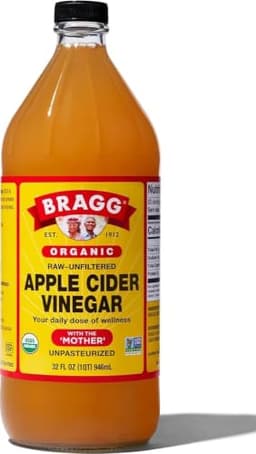
Raw, unfiltered ACV has the strongest fermentation aroma, which is the entire engine of the trap. One bottle baits months of refills for less than a single branded lure.
$5-$9 · Best for Baiting every fruit fly build on this page
Check price on Amazon →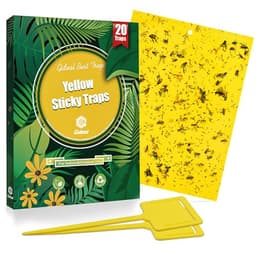
The manufactured version of build #5, minus the mess: stays tacky 2+ weeks, catches on both faces, and lies flat at soil level where fungus gnat adults actually cruise.
$6-$12 · Best for Any fly problem that traces back to houseplant soil
Check price on Amazon →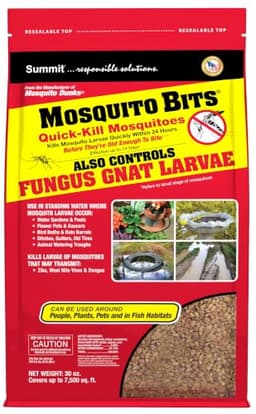
If the flies are coming from your plants, no counter-top trap ends it — Bti in the soil kills the larvae the adults hatched from. Soak, water in weekly, done in 3–4 weeks.
$8-$15 · Best for Fixing the source when the 'fruit flies' turn out to be gnats
Check price on Amazon →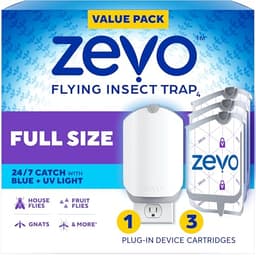
The buy-it option for house flies and moths: a plug-in UV lure with a sticky cartridge that works overnight while its light has no competition. No bait to refresh.
$18-$25 · Best for Persistent house flies that ignore bait traps
Check price on Amazon →Treatment information on PlantFix is educational. When using any pesticide — including organic options like neem oil or insecticidal soap — read and follow the entire product label; the label is the law. For persistent or high-stakes problems, your local university extension service offers free, region-specific advice. Read about how we source and verify treatment guidance in our Editorial Standards.
FAQ
What is the best homemade fly trap?▼
For fruit flies — the most common target — a bowl with an inch of apple cider vinegar, two drops of dish soap, and plastic wrap with a few holes poked in it, placed within two feet of where they gather. For house flies, a cut-down soda bottle with the top inverted as a funnel, baited with sugar water. No homemade trap works on fungus gnats or drain flies; those need soil treatment and drain cleaning respectively.
Why do you put dish soap in a vinegar fly trap?▼
The soap breaks the surface tension of the vinegar. Without it, fruit flies can literally stand on the liquid's surface, drink, and leave; with a drop or two, they sink on contact. It doesn't change the attraction — that's the vinegar's job — it just makes the landing fatal.
Does white vinegar work in a fly trap?▼
No — this is the most common reason homemade traps fail. Fruit flies are drawn to the aroma of fermentation, which apple cider vinegar has and distilled white vinegar doesn't. Use apple cider vinegar, red wine dregs, or a slice of ripe banana as bait, and replace it every 5–7 days as the aroma fades.
How do you make a fly trap with a plastic bottle?▼
Cut a 2-liter bottle about a third of the way down from the top. Fill the base with a few inches of sugar water (add a drop of dish soap) or a piece of overripe fruit, flip the top upside-down so the neck points into the base like a funnel, and tape the edges together. Flies enter through the neck to reach the bait and can't find the small opening to leave. Best used near doors, trash, and compost — it's a house fly design, not a fruit fly one.
How long does a homemade fly trap take to work?▼
A correctly placed ACV trap catches its first fruit flies within hours and makes a visible dent in 2–3 days. Clearing an infestation takes about a week — and only if you also remove what they're breeding in (ripe fruit, drains, recycling, trash). Traps kill adults; the source keeps making more until it's gone.
Why are flies not going to my trap?▼
Usually one of five reasons: it's the wrong fly (fungus gnats and drain flies ignore vinegar traps entirely), you used white vinegar instead of apple cider vinegar, the bait is more than a week old, the trap is too far from where flies gather, or something nearby — open fruit, juice, wine — smells better than your bait. Fix those in order and the trap fills.
Related
- Apple Cider Vinegar Gnat Trap: The Recipe That Works in Hours →
- Best Indoor Fly Traps for Plant Owners (2026): What Actually Works →
- Gnats vs Fruit Flies: How to Tell the Difference in 10 Seconds →
- How to Get Rid of Gnats in Plants Fast: 7 Proven Methods →
- Fungus Gnats: How to Identify & Eliminate Them for Good →
- Yellow Sticky Traps for Gnats: Placement & Best Picks →
- Mosquito Bits for Fungus Gnats: Dosage + 24-Hour Kill →
Not sure what's wrong?
Use the diagnosis tool →Get seasonal plant care reminders and pest alerts.